

Introduction
On a commercial vehicle, the braking system is built for one thing above all: reliability under heavy load. That is why truck and trailer drum brakes remain a trusted choice across the industry. Most explanations of how drum brakes work describe passenger cars — hydraulic, compact, self-adjusting. Commercial trucks and trailers run a different system, and that system is what this guide covers: the parts that do the work, the sequence from pedal to stop, how rear drum brakes differ, and how drum brakes compare with disc brakes.
Heavy-Duty Brake Drum Structure & Key Components
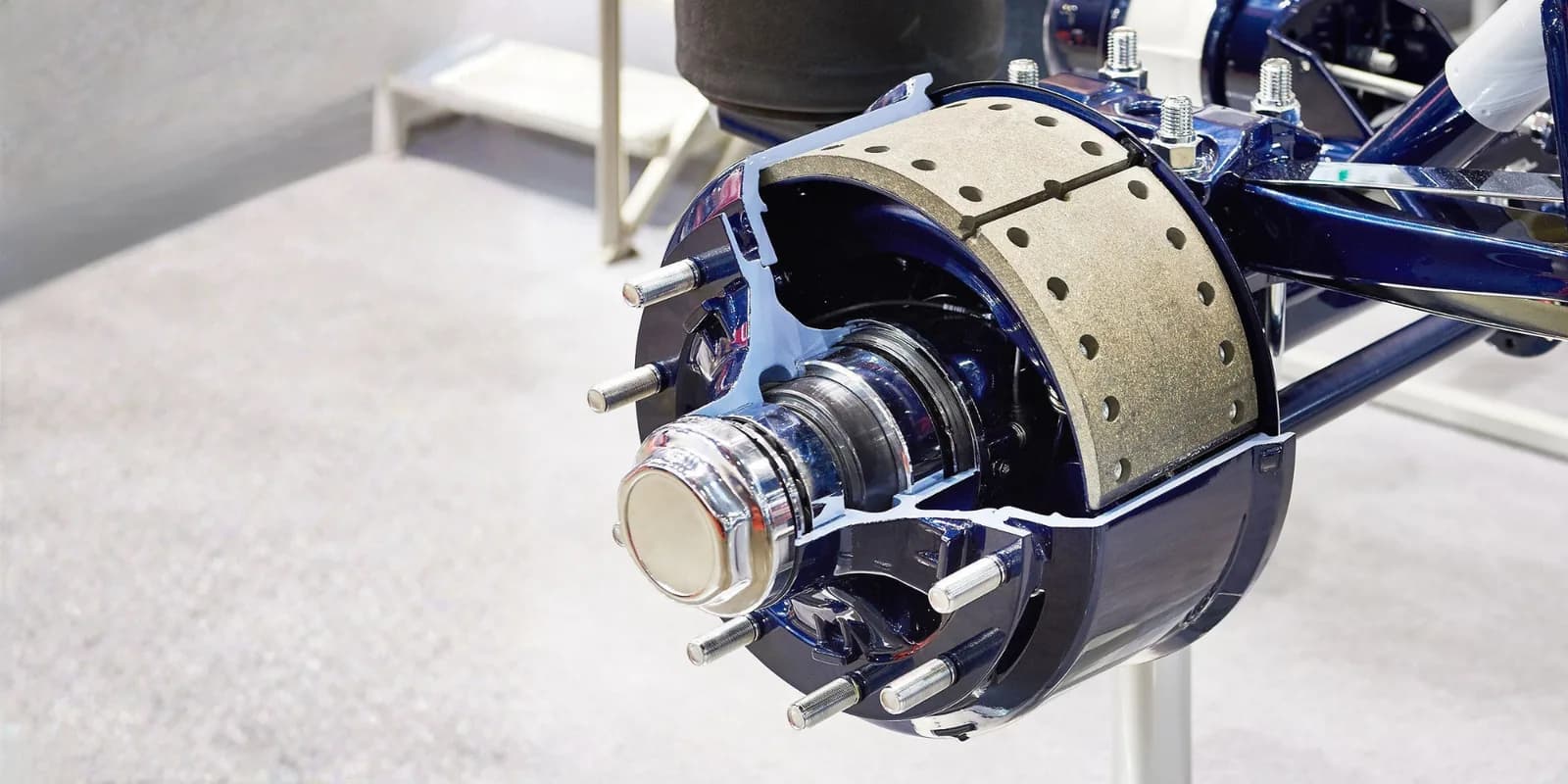
Most commercial vehicles on the road today use air-operated drum brakes, commonly known as S-cam drum brakes. While the system may look complex, the operating principle is straightforward and consistent across applications. The drum brake diagram below maps all the components of the system.
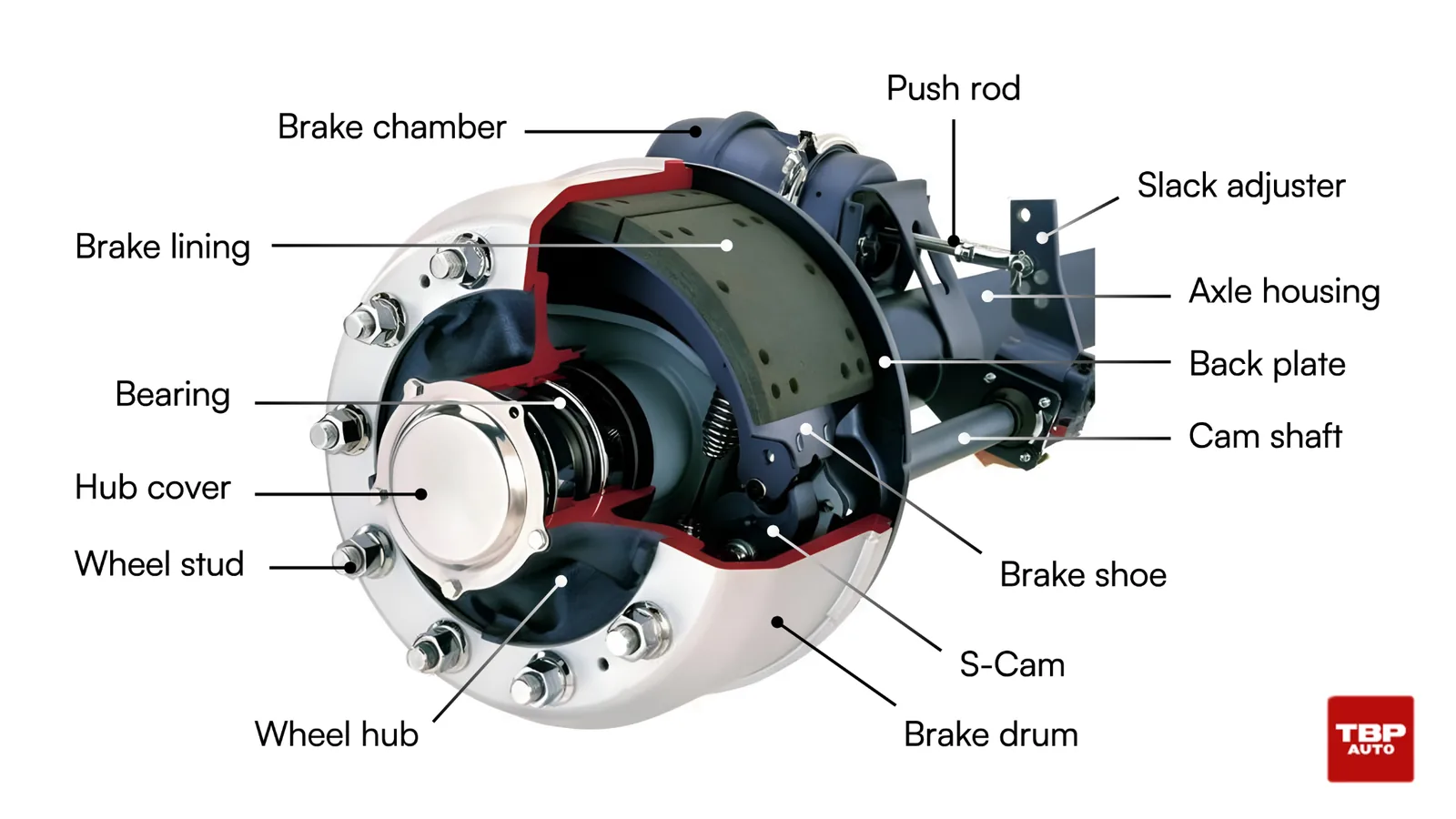
To understand how a drum brake works and wears, it helps to know the main components and how they operate together. In truck and trailer service, these components are built heavier and larger than passenger vehicle equivalents.
| Component | Role | Image |
|---|---|---|
| Brake Drum | Provides the friction surface and absorbs heat generated during braking. | 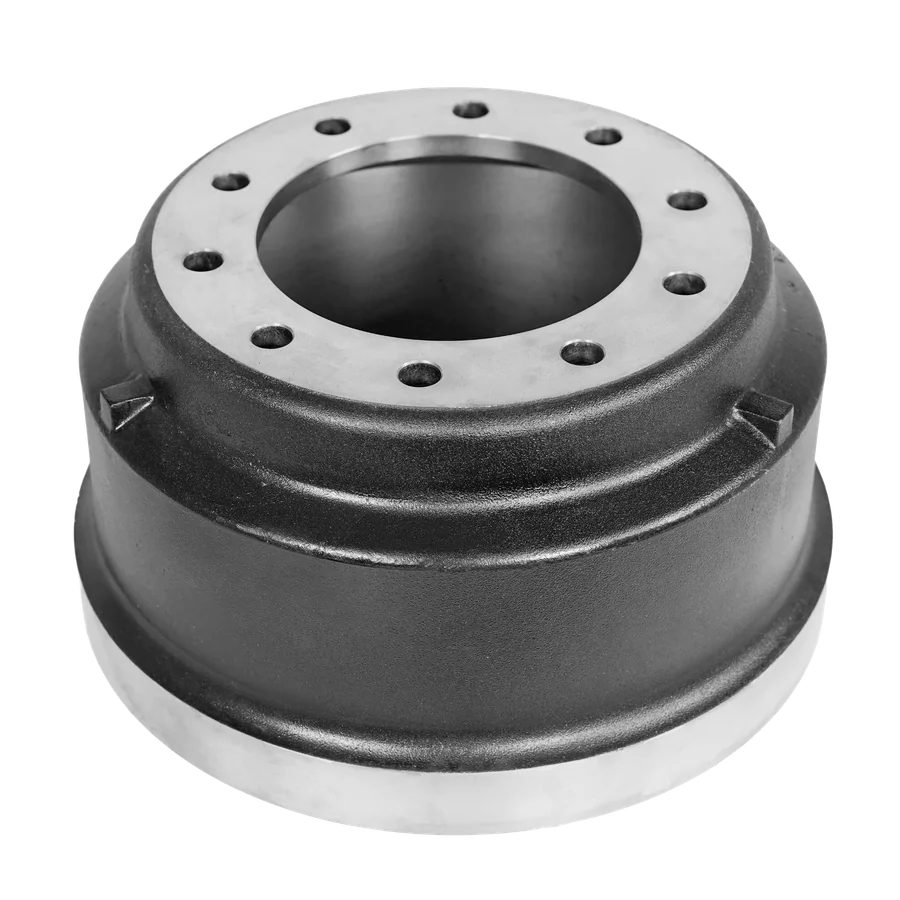 |
| Brake Shoes | Carry the friction lining and press against the drum during braking. | 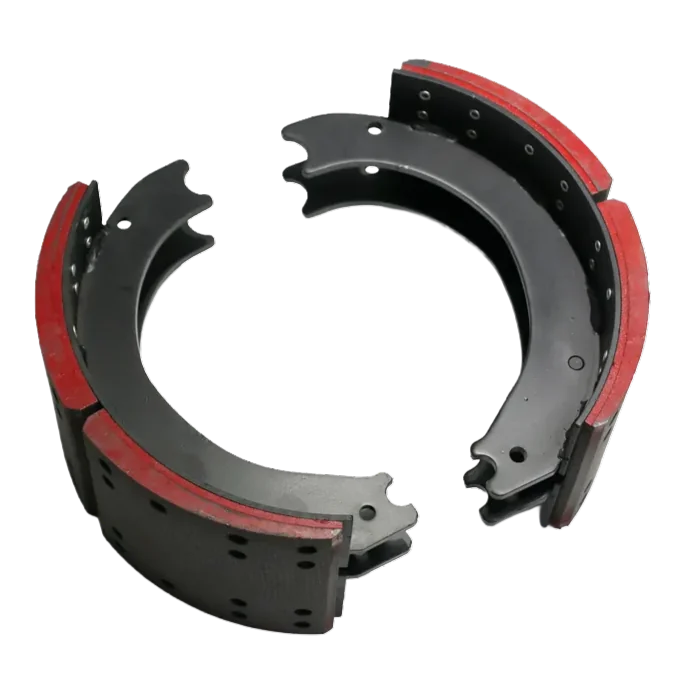 |
| Brake Chamber & Pushrod | Convert air pressure into mechanical force. The pushrod extends and retracts with each brake application. | 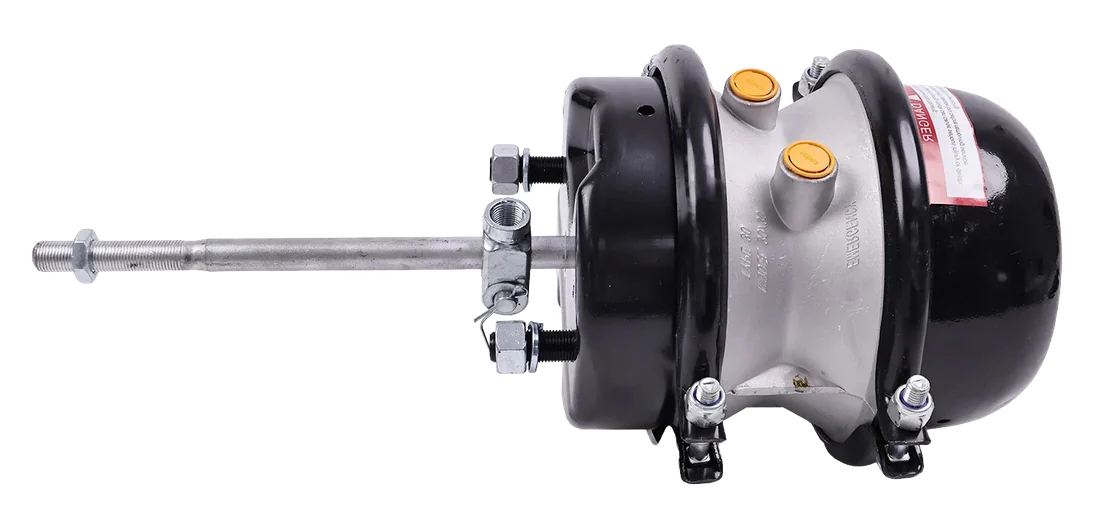 |
| Slack Adjuster | Transfers motion from the pushrod to the camshaft and maintains necessary and correct shoe-to-drum clearance. | 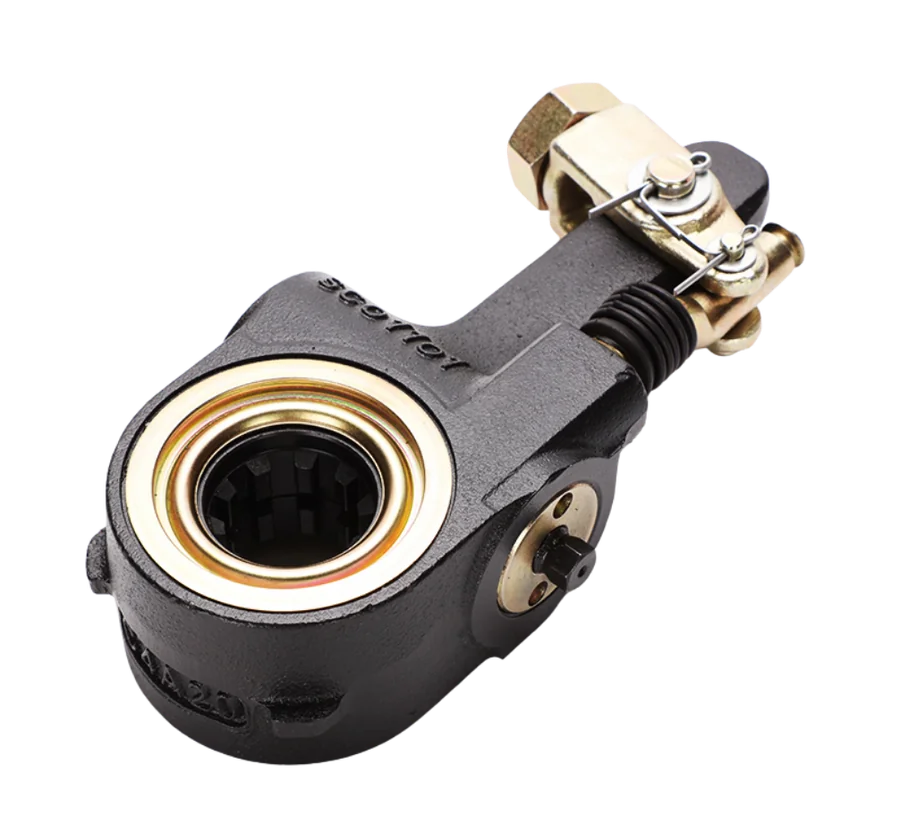 |
| S-Cam & Camshaft | The S-cam is the heart of the drum brake. As it rotates, it spreads the shoes apart and applies force evenly to both sides of the drum. | 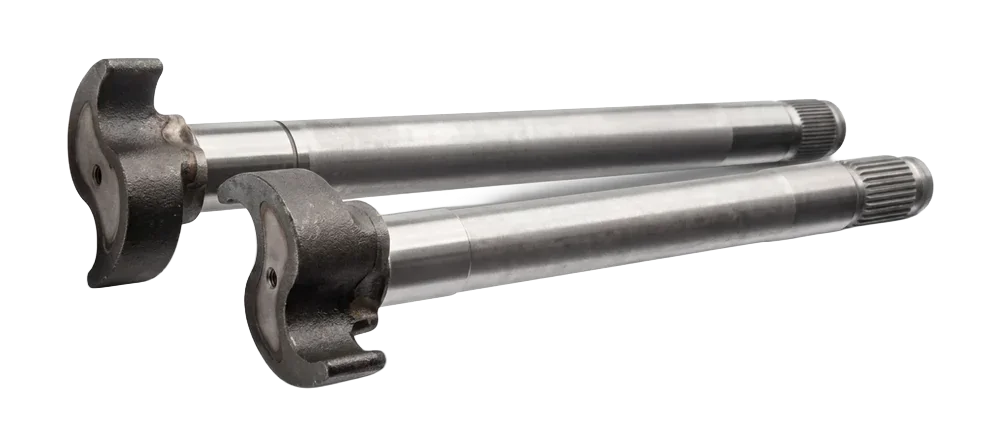 |
| Return Springs | Pull the shoes fully clear of the drum once the brake is released. | 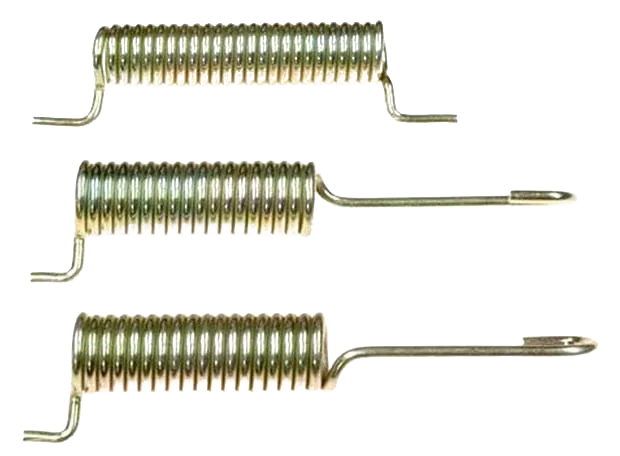 |
These components work as a system, so sometimes, replacing worn brake shoes and drums without addressing supporting hardware can lead to uneven wear and reduced braking efficiency.
Drum Brake Working Mechanism on Commercial Trucks & Trailers
How does a drum brake work step-by-step? From the moment the driver presses the pedal, the drum brake system works through five quick stages:
- Air pressure activates the system. Pressing the brake pedal sends compressed air from the vehicle's air system to each wheel's brake chamber.
- Mechanical force is created. Inside the chamber, that air pushes against a diaphragm, driving a pushrod outward — the force that will apply the brake.
- The slack adjuster transfers motion. The pushrod connects to a slack adjuster, which turns its straight-line push into rotation, twisting the brake camshaft.
- The S-cam spreads the shoes. As the camshaft turns, the S-cam forces the shoes outward until their linings meet the inner surface of the drum, creating friction.
- Friction slows the wheel. That friction slows the drum, the drum slows the wheel, and the vehicle comes under control.
When the driver releases the brake pedal, air pressure is released, return springs pull the shoes away from the drum, and the wheel rotates freely again.
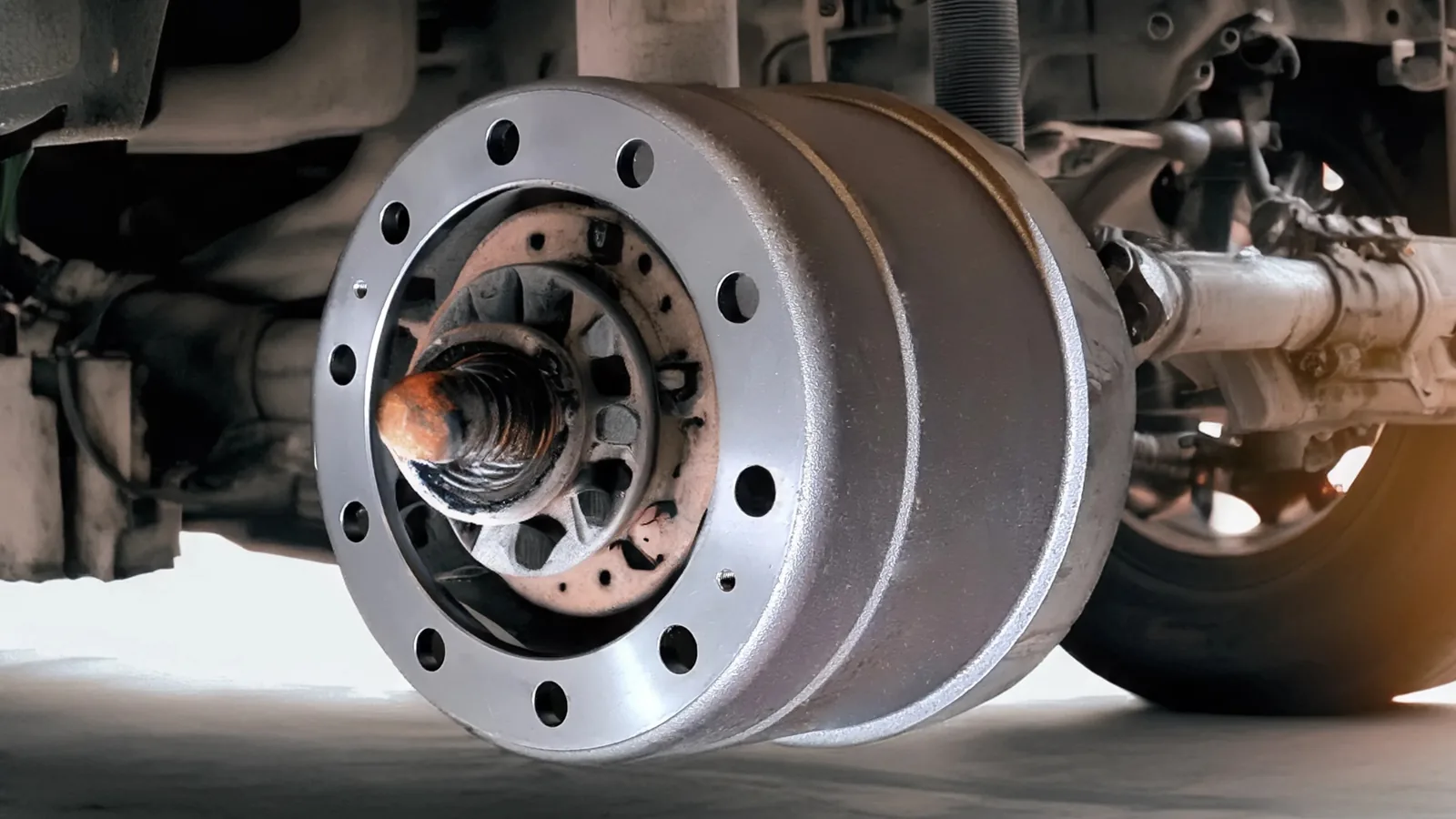
That whole sequence is the service brake — the compressed-air braking a driver uses on every stop, and in practical terms how drum brakes work day to day. Commercial trucks and trailers add a second function for parking and emergency braking, the spring brake, which the next section explains.
How Do Rear Drum Brakes Work on Commercial Vehicles?
From a mechanical standpoint, rear drum brakes work the same way as any other drum brake on the vehicle. The difference lies in their role and load.
Rear axles, both on tractors and trailers, carry significant weight. As a result, rear drum brakes often handle a large share of the braking work. They are also typically fitted with spring brake chambers, which serve two jobs:
- Parking and emergency braking: A spring brake chamber generates its holding force with a heavy mechanical spring, not air. Air pressure is used only to compress that spring and release the brake. If air pressure is lost, the spring applies the brake automatically — a fail-safe that keeps a parked or disabled vehicle from rolling.
- Load management: Because rear axles run under higher loads, brake selection, shoe friction material, and drum condition are especially important. Consistent maintenance helps prevent overheating and uneven wear.
How Do Drum Brakes Work vs Disc Brakes?
Many vehicles today operate with a mix of brake types, so the topic of drum brakes vs disc brakes often comes up.
The core difference between drum brakes vs disc brakes is how friction is created. Drum brakes work when brake shoes press outward against the inside of a rotating drum. In a disc brake, a caliper squeezes pads against both faces of an exposed rotor.
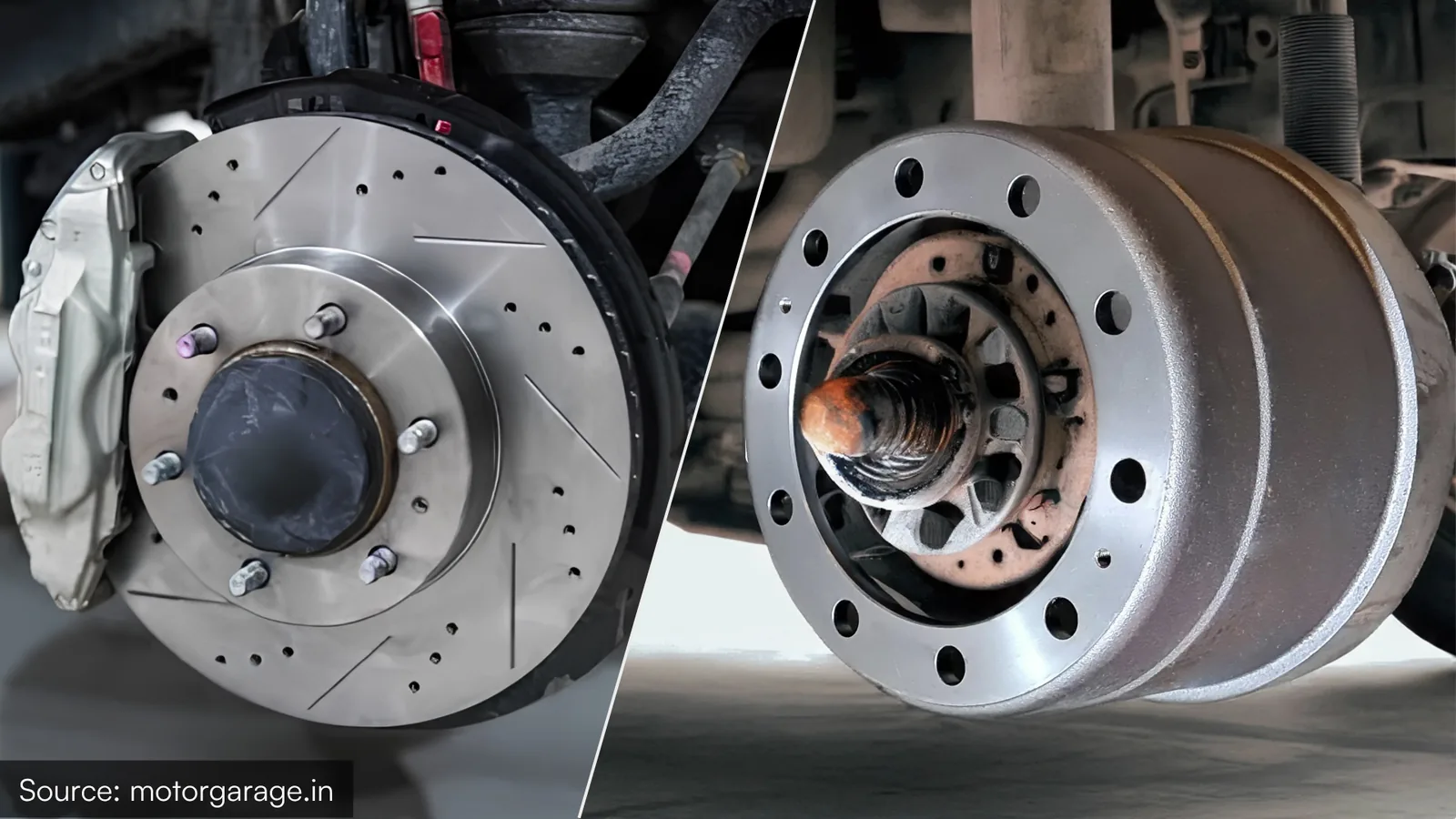
That difference drives the trade-offs. The S-cam applies force to both shoes at once; drum rotation lends the leading shoe a small self-energizing assist, but the cam's fixed geometry keeps the brake's output steady and predictable rather than grabby.
The enclosed design gives a large, consistent friction surface that holds up under sustained load — one reason drum brakes have been used in heavy-duty fleets for decades. Their sealed construction also shrugs off the water, dust, and grime that reach an open caliper.
Disc brakes trade that enclosure for airflow: the open rotor sheds heat quickly, which provides consistent braking during repeated or high-speed stops.
Neither is simply “better.” The right choice depends on axle position, duty cycle, and how a fleet balances heat management against durability, cost, and serviceability.
Final Thoughts
So, how do drum brakes work on trucks and trailers? Through a dependable combination of air pressure, mechanical leverage, and friction between brake shoes and drums. The system is simple in concept, yet powerful enough to control the heaviest commercial vehicles on the road.
Despite ongoing discussions around drum brakes vs disc brakes, drum brakes remain a trusted solution for many commercial applications. Their durability, serviceability, and integrated parking brake function make them a practical choice for fleets worldwide.
When the system is understood and maintained correctly, drum brakes continue to deliver safe and consistent performance.
Sourcing drums for a heavy-duty fleet? Browse the TBP Auto catalog or dig into more technical guides on our blog.